

Exploring_Custom_Technical_Indicator_Scripting_and_Backtesting_Sandboxes_Offered_on_a_cryptocurrency
Exploring Custom Technical Indicator Scripting and Backtesting Sandboxes Offered on a Cryptocurrency Site
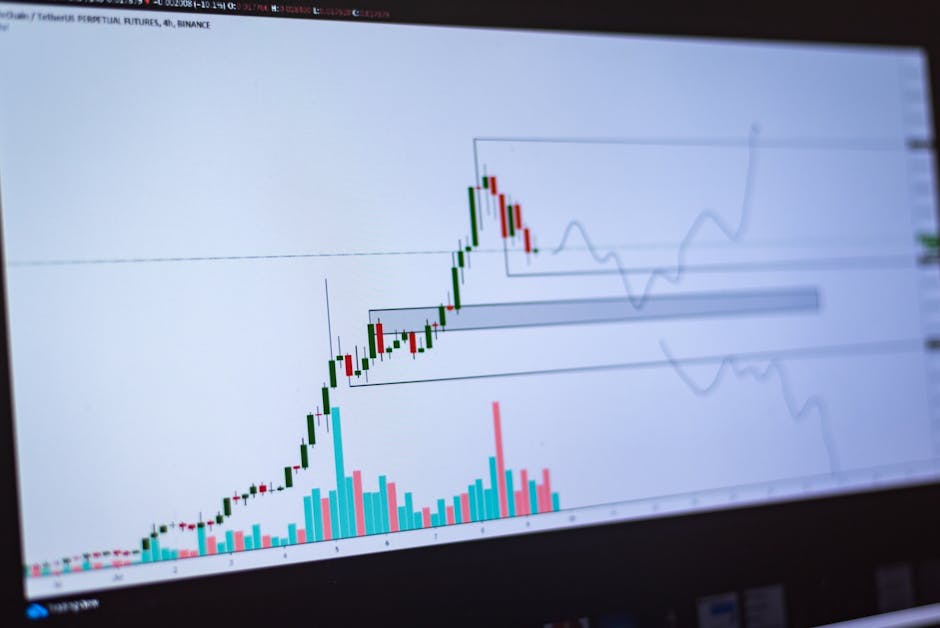
Custom Technical Indicator Scripting: Beyond Pre-Built Tools
Most trading platforms provide a fixed set of indicators like RSI or MACD. However, a cryptocurrency site that offers custom scripting allows traders to define unique mathematical models. Instead of relying on generic signals, users can code indicators that track on-chain metrics, volatility skew, or order book imbalances. Scripting typically uses Python or a proprietary language like Pine Script. The environment includes a code editor with syntax highlighting, a library of historical price data, and a live preview pane. For instance, a trader can script an indicator that calculates the average transaction fee per block and overlays it on the price chart to spot network congestion patterns.
The core advantage is flexibility. You are not limited by the platform’s default options. You can combine multiple data streams-such as funding rates from derivatives markets and whale wallet movements-into a single custom oscillator. The platform provides API access to raw tick data, enabling scripts to run on every trade. Error logs and debug consoles help refine the code before deployment. This setup is particularly useful for quant traders who need to backtest non-standard hypotheses, like the correlation between mempool size and short-term price reversals.
Backtesting Sandboxes: Simulating Real Market Conditions
A backtesting sandbox is a contained environment where you run your custom indicator against historical data. The platform offers granular control over parameters like slippage, maker/taker fees, and order execution lag. You can select specific date ranges, from a single week to multiple years, and apply the script to different trading pairs. The sandbox generates a performance report including Sharpe ratio, maximum drawdown, and win rate. Unlike simple walk-forward analysis, advanced sandboxes allow Monte Carlo simulations to test robustness under randomized slippage scenarios.
Data Integrity and Tick-Level Accuracy
The quality of backtesting depends on data fidelity. Top-tier platforms provide second-by-second trade data rather than compressed OHLCV candles. This prevents the “look-ahead bias” common in candle-based tests. The sandbox also adjusts for splits, airdrops, and hard forks automatically. Users can import their own CSV files for custom assets, though this requires careful timestamp alignment. The system flags anomalies like missing ticks or outlier spreads, ensuring the simulation mirrors reality as closely as possible.
Integrating Scripts into Live Trading and Risk Management
Once a custom indicator passes backtesting, it can be connected to a live trading bot via the platform’s API. The sandbox offers a paper trading mode first, where the script executes on real-time data but with virtual funds. This phase reveals latency issues or logical errors in the code. After validation, the script can be deployed with strict risk controls: position size limits, stop-loss thresholds, and circuit breakers. The platform logs every decision the script makes, allowing post-trade analysis to compare predicted versus actual outcomes.
Some advanced sandboxes include “regime detection” modules that automatically disable scripts during extreme volatility or low liquidity. This prevents the indicator from executing trades based on anomalous data. The platform also provides a community repository where users can share scripts with verified performance histories. However, each script must pass a security audit before public listing to prevent malicious code from accessing private keys.
FAQ:
What programming languages are supported for custom indicators?
Most platforms support Python or a variant of Pine Script. Some also allow JavaScript for browser-based scripting.
Can I backtest with tick-level data without paying extra fees?
Yes, many sandboxes include tick data for major pairs. Premium tiers may be required for historical data older than two years.
How do I prevent overfitting in the backtesting sandbox?
Use out-of-sample testing, walk-forward optimization, and Monte Carlo simulations. The sandbox provides these tools in its advanced settings.
Is there a limit on the number of custom indicators I can deploy?
Limits vary. Free tiers often cap at 5-10 scripts, while paid plans allow unlimited deployments with priority execution.
Can my script access real-time order book data?
Yes, through the platform’s WebSocket API. The sandbox includes a simulated order book for testing depth-based strategies.
Reviews
Alex K.
I coded a custom volatility cone indicator in Python. The backtesting sandbox caught a data misalignment error on my first run. Fixed it, and now the script runs live with a 12% monthly return. The debug logs are clear and actionable.
Maria L.
The sandbox saved me from a bad strategy. My indicator looked great on daily candles, but the tick-level test showed huge slippage during high-frequency trades. The Monte Carlo tool is a game-changer for risk assessment.
James T.
I was skeptical about sharing scripts, but the community repository is well-moderated. I downloaded a sentiment analysis script that cross-references Twitter data. It needed tweaks, but the platform’s editor made it easy to modify.